Maize/Corn Rate in Pakistan Today
Corn has become one of the most famous crops in Pakistan. Its prices increase every year. Today, the price of corn in different cities of Pakistan is different. Its prices range from Rs. 2,500-Rs.3,000. It is due to different reasons. The price of corn in Pakistan is decided at the local market through buying and selling. Miaz is used as fodder for livestock and fed to humans and chickens. It is used as flour in different cases. In this, we discuss about the current rate of corn in the Provinces of Pakistan, why prices differ in different cities, why prices changed in Pakistan, miaze export prices in Pakistan, maize feed vs human consumption prices, monthly and seasonal prices update, maize prices in historical data, features of maize, and maize prices comparison in the different provinces of Pakistan.
Learn About: Cotton Seed Prices In Pakistan

مکئی پاکستان کی مشہور ترین فصلوں میں سے ایک بن چکی ہے۔ اس کی قیمتیں ہر سال بڑھ جاتی ہیں۔ پاکستان کے مختلف شہروں میں آج مکئی کی قیمت مختلف ہے۔ اس کی قیمتیں روپے سے لے کر ہیں۔ 2,500-3,000 روپے۔ یہ مختلف وجوہات کی وجہ سے ہے۔ پاکستان میں مکئی کی قیمت کا فیصلہ مقامی مارکیٹ میں خرید و فروخت کے ذریعے کیا جاتا ہے۔ میاز کو مویشیوں کے چارے کے طور پر استعمال کیا جاتا ہے اور انسانوں اور مرغیوں کے لیے کھلایا جاتا ہے۔ یہ مختلف صورتوں میں آٹے کے طور پر استعمال ہوتا ہے۔
اس میں ہم پاکستان کے صوبوں میں مکئی کی موجودہ شرح کے بارے میں بات کرتے ہیں، مختلف شہروں میں قیمتوں میں فرق کیوں ہے، پاکستان میں قیمتیں کیوں تبدیل ہوتی ہیں، پاکستان میں میاز کی برآمدی قیمتیں، مکئی کی خوراک بمقابلہ انسانی استعمال کی قیمتیں، ماہانہ اور موسمی قیمتوں کی تازہ کاری، تاریخی اعداد و شمار میں مکئی کی قیمتیں، مکئی کی خصوصیات، اور پاکستان کے مختلف صوبوں میں مکئی کی قیمتوں کا موازنہ۔
Today’s Maize Rate in Punjab
Today miaze rate in Punjab is different from other provinces. It is due to some reasons. Here, we also discuss the current prices of different provinces of Pakistan. Punjab is the largest maize-producing region in Pakistan. Prices here usually depend on crop arrival in mandis and demand from poultry and feed industries.
| Punjab City | Minimum Price (40kg) | Maximum Price (40kg) |
| Arifwala | Rs. 2,750 | Rs. 2,870 |
| Attock | Rs. 1,920 | Rs. 2,680 |
| Ahmadpur East | Rs. 2,960 | Rs. 3,500 |
| Bahawalnagar | Rs. 2,600 | Rs. 3,050 |
| Bhakkar | Rs. 1,940 | Rs. 2,650 |
| Burewala | Rs. 2,750 | Rs. 2,940 |
| Bhalwal | Rs. 1,980 | Rs. 2,610 |
| Chishtian | Rs. 2,500 | Rs. 3,030 |
| Chakwal | Rs. 1,910 | Rs. 2,640 |
| Chiniot | Rs. 1,930 | Rs. 2,610 |
| Dera Ghazi Khan | Rs. 1,940 | Rs. 2,610 |
| Dinga | Rs. 1,940 | Rs. 2,620 |
| Daska | Rs. 1,940 | Rs. 2,620 |
| Dijkot | Rs. 1,950 | Rs. 2,690 |
| Faisalabad | Rs. 2,830 | Rs. 3,050 |
| Gujranwala | Rs. 2,700 | Rs. 3,030 |
| Gujrat | Rs. 1,970 | Rs. 2,630 |
| Gojra | Rs. 2,700 | Rs. 2,930 |
| Hujra Shah Muqeem | Rs. 1,940 | Rs. 2,660 |
| Hafizabad | Rs. 1,940 | Rs. 2,660 |
| Hyderabad | Rs. 2,600 | Rs. 2,950 |
| Hasilpur | Rs. 2,600 | Rs. 2,870 |
| Haroonabad | Rs. 1,980 | Rs. 2,680 |
| Jaranwala | Rs. 1,960 | Rs. 2,600 |
| Jhelum | Rs. 1,950 | Rs. 2,690 |
| Jatoi | Rs. 1,940 | Rs. 2,650 |
| Jhang | Rs. 2,700 | Rs. 3,040 |
| Karachi | Rs. 2,600 | Rs. 2,950 |
| Kasur | Rs. 1,950 | Rs. 1,950 |
| Khanewal | Rs. 2,500 | Rs. 3,020 |
| Kot Abdul Malik | Rs. 1,940 | Rs. 2,660 |
| Kamalia | Rs. 1,800 | Rs. 1,980 |
| Kot Addu | Rs. 1,940 | Rs. 2,650 |
| Kabirwala | Rs. 1,940 | Rs. 2,650 |
| Khanpur | Rs. 1,940 | Rs. 2,650 |
| Khurrianwala | Rs. 1,950 | Rs. 2,690 |
| Khushab | Rs. 1,940 | Rs. 2,650 |
| Kot Momin | Rs. 1,940 | Rs. 2,650 |
| Kamoke | Rs. 1,940 | Rs. 2,660 |
| Lahore | Rs. 2,530 | Rs. 2,950 |
| Layyah | Rs. 1,940 | Rs. 2,650 |
| Lodhran | Rs. 1,820 | Rs. 2,200 |
| Murree | Rs. 1,940 | Rs. 2,650 |
| Multan | Rs. 2,500 | Rs. 3,050 |
| Muzaffargarh | Rs. 1,940 | Rs. 2,650 |
| Mian Channu | Rs. 2,600 | Rs. 3,050 |
| Mianwali | Rs. 1,940 | Rs. 2,650 |
| Mandi Bahauddin | Rs. 1,940 | Rs. 2,650 |
| Muridke | Rs. 1,940 | Rs. 2,660 |
| Nowshera Virkan | Rs. 1,940 | Rs. 2,660 |
| Nankana Sahib | Rs. 1,940 | Rs. 2,660 |
| Narowal | Rs. 1,940 | Rs. 2,660 |
| Okara | Rs. 2,700 | Rs. 3,080 |
| Pattoki | Rs. 1,657 | Rs. 2,108 |
| Pakpattan | Rs. 2,650 | Rs. 3,000 |
| Pir Mahal | Rs. 1,940 | Rs. 2,650 |
| Rawalpindi | Rs. 7,200 | Rs. 7,400 |
| Renala Khurd | Rs. 1,940 | Rs. 2,650 |
| Rahim Yar Khan | Rs. 2,530 | Rs. 3,020 |
| Shujabad | Rs. 1,940 | Rs. 2,650 |
| Sialkot | Rs. 1,700 | Rs. 2,000 |
| Sambrial | Rs. 1,940 | Rs. 2,650 |
| Sahiwal | Rs. 2,600 | Rs. 2,920 |
| Shakargarh | Rs. 1,940 | Rs. 2,650 |
| Sharaqpur | Rs. 1,940 | Rs. 2,650 |
| Sargodha | Rs. 1,940 | Rs. 2,650 |
| Shahkot | Rs. 1,940 | Rs. 2,650 |
| Sheikhupura | Rs. 2,530 | Rs. 2,950 |
| Samundri | Rs. 1,940 | Rs. 2,650 |
| Sadiqabad | Rs. 1,800 | Rs. 2,300 |
| Samundari | Rs. 1,940 | Rs. 2,650 |
| Talagang | Rs. 1,940 | Rs. 2,650 |
| Tando Adam | Rs. 2,600 | Rs. 2,950 |
| Taxila | Rs. 1,940 | Rs. 2,650 |
| Tarn Taran | Rs. 1,940 | Rs. 2,650 |
| Taunsa | Rs. 1,940 | Rs. 2,650 |
| Toba Tek Singh | Rs. 2,700 | Rs. 3,050 |
| Uch Sharif | Rs. 1,940 | Rs. 2,650 |
| Vehari | Rs. 2,500 | Rs. 3,030 |
| Wah Cantonment | Rs. 1,940 | Rs. 2,650 |
| Wazirabad | Rs. 1,940 | Rs. 2,650 |
Read More: Rice(Dhaan) Price in Pakistan

Maize Prices in Khyber Pakhtunkhwa
| City | Minimum Price | Maximum Price |
| Abbottabad | Rs. 1,850 | Rs. 2,300 |
| Alpuri | Rs. 1,820 | Rs. 2,270 |
| Akora Khattak | Rs. 1,780 | Rs. 2,200 |
| Bannu | Rs. 1,900 | Rs. 2,480 |
| Batkhela | Rs. 1,750 | Rs. 2,150 |
| Bara | Rs. 1,730 | Rs. 2,100 |
| Bahrain | Rs. 1,700 | Rs. 2,050 |
| Besham | Rs. 1,740 | Rs. 2,200 |
| Buner | Rs. 1,790 | Rs. 2,270 |
| Charsadda | Rs. 1,800 | Rs. 2,300 |
| Chitral | Rs. 1,680 | Rs. 2,000 |
| Chakdara | Rs. 1,720 | Rs. 2,130 |
| Dargai | Rs. 1,750 | Rs. 2,200 |
| Dera Ismail Khan | Rs. 1,940 | Rs. 2,650 |
| Darra Adam Khel | Rs. 1,720 | Rs. 2,130 |
| Dasu | Rs. 1,650 | Rs. 2,000 |
| Dir | Rs. 1,700 | Rs. 2,100 |
| Domel | Rs. 1,710 | Rs. 2,130 |
| Ghallanai | Rs. 1,680 | Rs. 2,050 |
| Garhi Habibullah | Rs. 1,700 | Rs. 2,100 |
| Hangu | Rs. 1,900 | Rs. 2,480 |
| Haripur | Rs. 1,800 | Rs. 2,300 |
| Jamrud | Rs. 1,730 | Rs. 2,100 |
| Jandola | Rs. 1,680 | Rs. 2,000 |
| Karak | Rs. 1,700 | Rs. 2,100 |
| Kohat | Rs. 1,720 | Rs. 2,130 |
| Kulachi | Rs. 1,680 | Rs. 2,000 |
| Kalam | Rs. 1,650 | Rs. 1,900 |
| Kabal | Rs. 1,750 | Rs. 2,200 |
| Khar (Bajaur) | Rs. 1,670 | Rs. 2,000 |
| Khwazakhela | Rs. 1,720 | Rs. 2,150 |
| Kundi | Rs. 1,680 | Rs. 2,050 |
| Lakki Marwat | Rs. 1,900 | Rs. 2,480 |
| Lachi | Rs. 1,900 | Rs. 2,480 |
| Landi Kotal | Rs. 1,730 | Rs. 2,100 |
| Lower Dir | Rs. 1,700 | Rs. 2,100 |
| Mardan | Rs. 1,830 | Rs. 2,300 |
| Mansehra | Rs. 1,800 | Rs. 2,270 |
| Matta | Rs. 1,650 | Rs. 1,900 |
| Mingora (Swat) | Rs. 1,700 | Rs. 2,100 |
| Miranshah | Rs. 1,670 | Rs. 2,000 |
| Nowshera | Rs. 1,800 | Rs. 2,300 |
| North Waziristan | Rs. 1,680 | Rs. 2,050 |
| Peshawar | Rs. 1,900 | Rs. 2,480 |
| Parachinar | Rs. 1,680 | Rs. 2,000 |
| Pattan | Rs. 1,700 | Rs. 2,100 |
| Razmak | Rs. 1,650 | Rs. 1,900 |
| Rustam | Rs. 1,680 | Rs. 2,050 |
| Swat | Rs. 1,700 | Rs. 2,100 |
| Swabi | Rs. 1,830 | Rs. 2,300 |
| Shangla | Rs. 1,650 | Rs. 1,900 |
| Shabqadar | Rs. 1,800 | Rs. 2,270 |
| South Waziristan | Rs. 1,670 | Rs. 2,000 |
| Serai Naurang | Rs. 1,900 | Rs. 2,480 |
| Shewa Adda | Rs. 1,800 | Rs. 2,270 |
| Tank | Rs. 1,900 | Rs. 2,480 |
| Tangi | Rs. 1,720 | Rs. 2,130 |
| Thall | Rs. 1,700 | Rs. 2,100 |
| Timergara | Rs. 1,700 | Rs. 2,100 |
| Topi | Rs. 1,800 | Rs. 2,300 |
| Tirah Valley | Rs. 1,650 | Rs. 1,900 |
| Takht Bhai | Rs. 1,830 | Rs. 2,300 |
| Torghar | Rs. 1,650 | Rs. 1,900 |
| Upper Dir | Rs. 1,700 | Rs. 2,100 |
| Wana | Rs. 1,670 | Rs. 2,000 |
| Wari | Rs. 1,670 | Rs. 2,000 |
Maize Price in Sindh Today (40kg)
| City | Minimum Price | Maximum Price |
| Ahmadpur | Rs. 2,200 | Rs. 2,870 |
| Aliabad | Rs. 2,310 | Rs. 2,630 |
| Amarkot | Rs. 2,230 | Rs. 2,570 |
| Arambagh | Rs. 2,260 | Rs. 2,580 |
| Badin | Rs. 2,380 | Rs. 2,590 |
| Bhiria City | Rs. 2,260 | Rs. 2,720 |
| Bhit Shah | Rs. 2,340 | Rs. 2,790 |
| Bozdar Wada | Rs. 2,200 | Rs. 2,470 |
| Chachro | Rs. 2,460 | Rs. 2,750 |
| Chhor | Rs. 2,260 | Rs. 2,720 |
| Chuhar Jamali | Rs. 2,500 | Rs. 2,760 |
| Dadu | Rs. 2,300 | Rs. 2,810 |
| Daharki | Rs. 2,360 | Rs. 2,630 |
| Digri | Rs. 2,410 | Rs. 2,860 |
| Diplo | Rs. 2,530 | Rs. 2,870 |
| Dokri | Rs. 2,290 | Rs. 2,630 |
| Fatehpur | Rs. 2,600 | Rs. 2,860 |
| Faiz Ganj | Rs. 2,310 | Rs. 2,570 |
| Gambat | Rs. 2,300 | Rs. 2,730 |
| Garhi Khairo | Rs. 2,470 | Rs. 2,790 |
| Gharo | Rs. 2,380 | Rs. 2,870 |
| Golarchi | Rs. 2,200 | Rs. 2,300 |
| Ghotki | Rs. 2,200 | Rs. 2,300 |
| Khairpur | Rs. 2,850 | Rs. 2,970 |
| Sukkur | Rs. 2,800 | Rs. 2,950 |

Current Maize Rate Overview
- Most users search the maize rate to know today’s mandi price. However, maize prices are not fixed. They change daily based on supply, demand, and grain quality.
- Through open trading in local mandis. Traders and buyers evaluate the grain and offer rates based on several factors:
- When harvest season brings large quantities to mandis, prices usually decrease. When supply is limited, prices increase.
- Poultry and livestock feed industries are major maize buyers. When feed demand rises, maize price increases.
- Dry maize gets higher rates because it stores longer and has better quality. Wet maize sells at lower prices.
- Government trade policies and global supply can influence domestic maize prices.
Average Price Range General Market Trend
While exact prices change daily, overall trends remain consistent across seasons.
- Low-quality maize, lower price
- Dry and clean, maize premium rate
- During the harvest season, prices decrease due to high supply
- Off-season period, price increases
- Major Punjab mandis have more stable market trends
Regional Maize Market Rates Comparison
Maize price varies by region because production, transport costs, and demand differ across provinces.
Punjab Markets
- Strong production base
- Active feed industry demand
- Competitive mandi environment
- Stable but moderate price range
Sindh Markets
- Lower local production
- Dependence on inter-provincial supply
- Price sensitivity to transport cost
In Khyber Pakhtunkhwa
- Supply from this area affects the national market flow.
- Seasonal production pattern
- Regional consumption demand
- Variable transport cost
Factors Affecting Maize Rate
Harvest Season Effect
During harvest months, maize arrival in mandis increases sharply. High supply decreases the prices of maize.
Feed Industry Demand
Poultry farms and livestock feeders are the largest maize consumers. When feed production increases, maize demand rises, and prices increase.
Role of Moisture in Grain Pricing
High price characteristics
- Dry grain
- Uniform size
- Clean kernels
- Low damage percentage
Low price characteristics
- High moisture
- Broken grain
- Fungus or damage
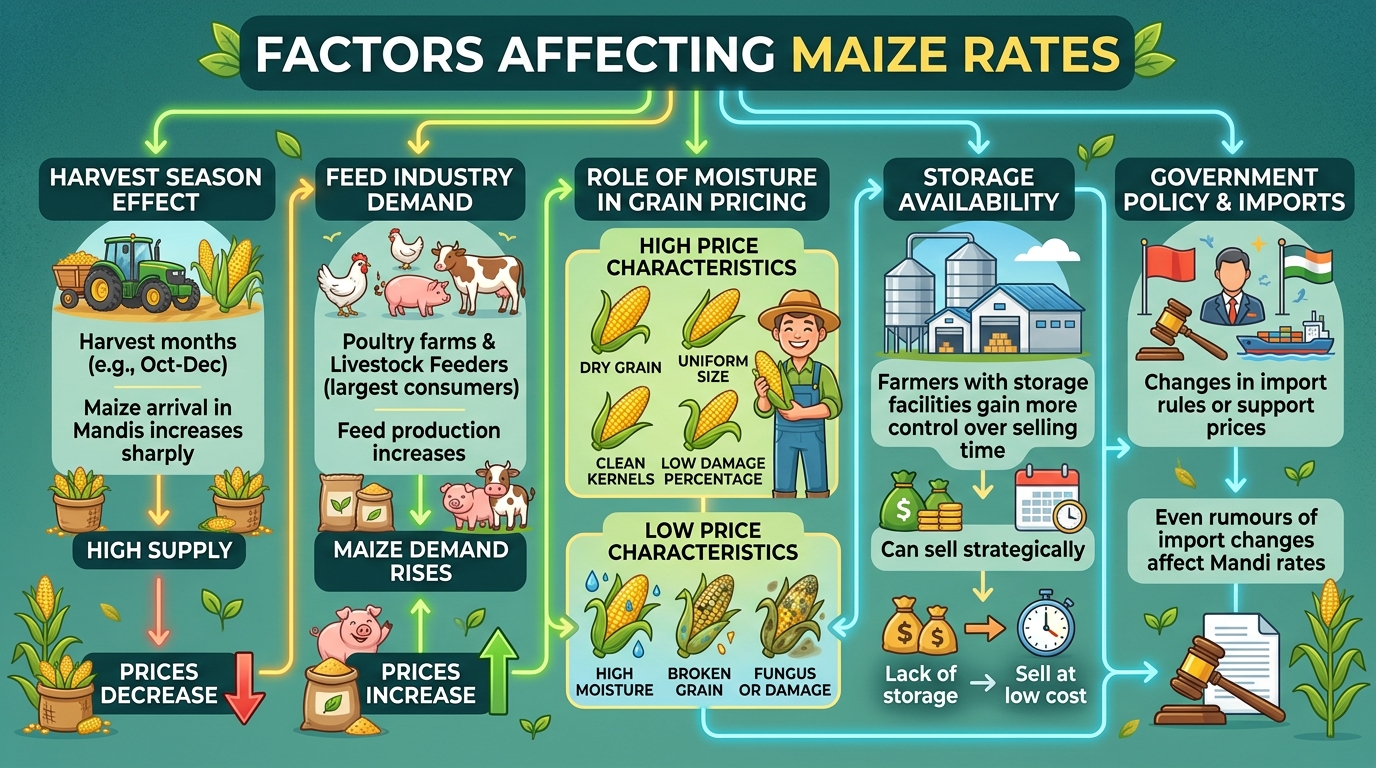
Storage Availability
Farmers who have storage facilities gain more control over selling time. Some farmers sell their corn after the harvest at a low cost.
Government Policy and Imports
When the government changes import rules or support prices, maize prices also change over time. Even rumours of import changes can affect mandi rates.
Farmer Selling Guide: Practical Tips
Best Time to Sell Maize
- Avoid selling immediately after harvest if storage is available
- Monitor mandi trends weekly
- Sell when supply decreases and demand increases
- Compare prices in multiple markets
How to Check Grain Quality
Farmers should evaluate maize before taking it to market:
- Check the moisture level
- Remove damaged grains
- Clean dust and impurities
- Ensure proper drying
Storage Tips to Prevent Loss
Proper storage helps farmers benefit from future price increases.
- Store maize in dry and ventilated place
- Protect from insects and rodents
- Use moisture control methods
- Avoid ground contact
Maize Rate Forecast
Short-term outlook
- Prices remain stable during regular supply periods
- Minor fluctuations based on mandi arrivals
Medium-term outlook
- Post-harvest recovery likely
- Feed demand supports price improvement
Read Also: Wheat Price in Pakistan – پاکستان میں گندم کی قیمت
Conclusion
In Pakistan, maize prices change daily because of supply, demand, and grain quality. Punjab markets are usually stable. Other provinces may show more price changes. Dry and clean maize has a high rate. Wet or damaged grain gets a low rate. Farmers can earn more by storing maize and selling when supply is low. Feed industry demand and harvest season strongly affect the market trend. Understanding these factors makes maize trading easier and more profitable.
پاکستان میں، رسد، طلب اور اناج کے معیار کی وجہ سے مکئی کی قیمتیں روزانہ تبدیل ہوتی ہیں۔ پنجاب کی مارکیٹیں عموماً مستحکم رہتی ہیں۔ دوسرے صوبے قیمتوں میں مزید تبدیلیاں دکھا سکتے ہیں۔ خشک اور صاف مکئی کو زیادہ ریٹ ملتا ہے لیکن گیلے یا خراب شدہ اناج کو کم ریٹ ملتا ہے۔ کسان مکئی کو ذخیرہ کرکے اور سپلائی کم ہونے پر فروخت کرکے زیادہ کما سکتے ہیں۔ فیڈ انڈسٹری کی طلب اور فصل کی کٹائی کا موسم مارکیٹ کے رجحان کو سختی سے متاثر کرتا ہے۔ ان عوامل کو سمجھنا مکئی کی تجارت کو آسان اور زیادہ منافع بخش بناتا ہے۔
FAQ’s
What is the overall situation of maize prices in Pakistan?
Maize prices change daily because supply, demand, and grain quality are always changing in local mandis.
What main factors affect maize price changes?
Harvest season, feed industry demand, and government trade conditions strongly influence the market trend.
How can buyers and farmers make better decisions?
By checking mandi prices regularly and understanding market conditions, they can buy and sell maize more wisely.